
Disc bulges and disc injuries in Port Kennedy
Hands-on care and staged rehab for disc bulges and other disc injuries, including recovery after back surgery.
Are you experiencing any of these?
- Deep lower back pain that's worse when you sit, bend or cough
- Pain that spreads into your buttock or down one leg
- Pins and needles or numbness in your leg or foot
- Struggling to stand up straight after sitting for a while
- A scan report that says disc bulge, and no idea what that means for your training
A disc bulge sounds frightening, especially when you read it on a scan report. Disc injuries are some of the cases we enjoy most at Range, because a clear plan makes such a difference to how people feel about them. Many disc bulges settle well with the right care, and plenty of people with a bulge on a scan have no pain at all.
We also look after people recovering from disc surgery, such as a discectomy or a lumbar fusion, once their surgeon is happy for rehab to start. The aim there is the same: build your back's strength gradually until you can train properly again.
If you have numbness around your groin, changes to your bladder or bowels, or weakness in your legs that's getting worse, please go to your GP or a hospital straight away.
What's often behind a disc injury
Discs are tough, but they can get irritated when load builds up faster than your back can handle. Common triggers we see include:
- Bending and lifting with a twist, often late in a long day
- Going back to heavy lifting too quickly after a break
- Long hours sitting, especially on flights to and from site
- Earlier episodes of back pain that never fully settled
- Losing strength and fitness after months of avoiding movement
How chiropractic care may help with a disc bulge
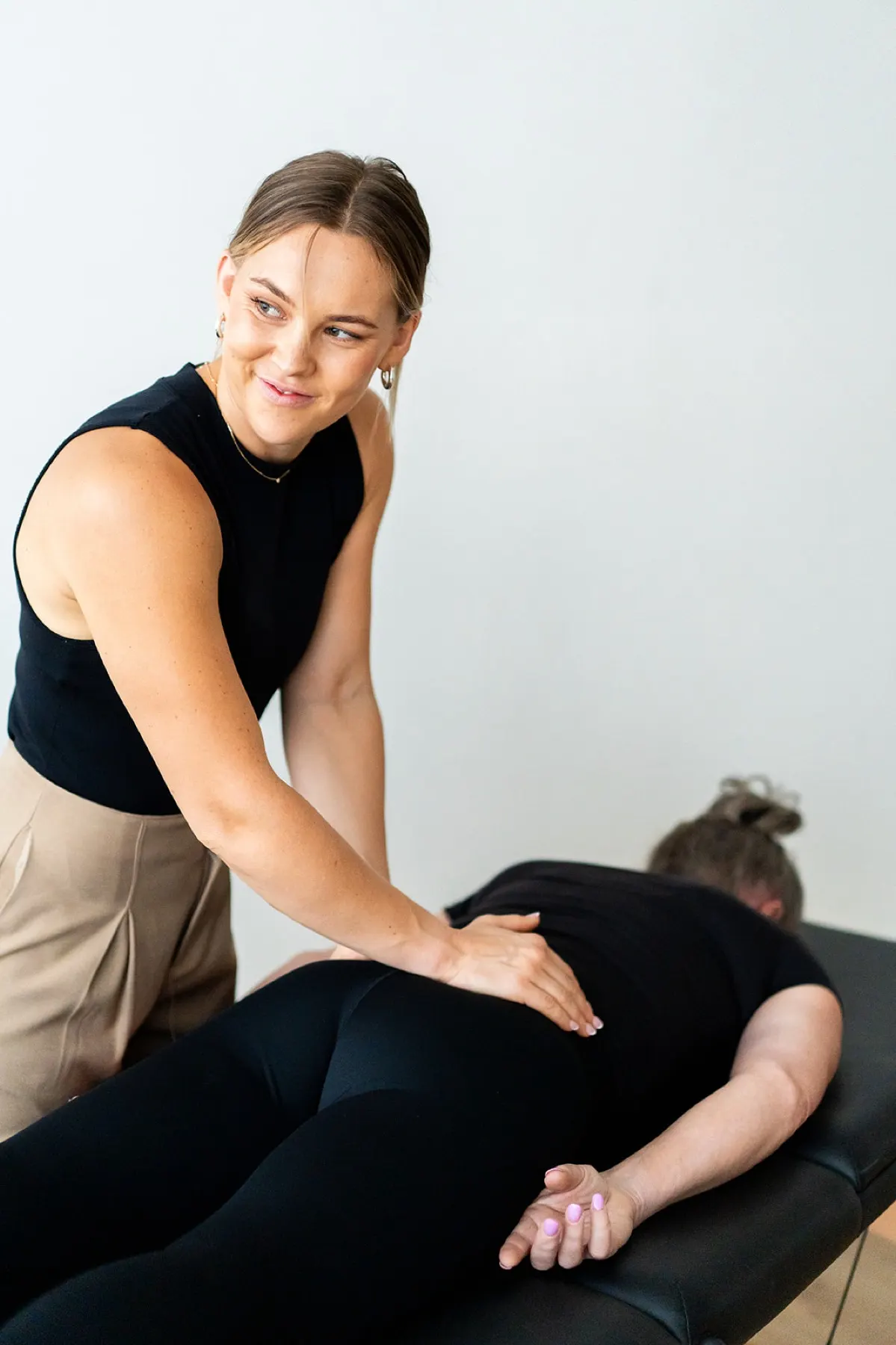
Your first appointment starts with the whole story, including any scans or reports you already have. Joey will test the nerves into your legs, checking strength, reflexes and feeling, and watch how your back moves. That shows how irritated the disc and nerve are, and how gently to start. If an MRI is clinically indicated, she'll arrange a referral.
Early treatment is about settling things down. Based on what the assessment shows, it may include joint mobilisation, soft tissue work, dry needling or gentle adjustments around the sore level, along with positions and movements that ease your symptoms. Each step is explained before it starts.
Your personalised plan for a disc injury
Disc injuries usually need a little patience. We'll explain what to expect over the first few weeks and how you'll know things are moving the right way. How often you come in early on depends on how irritable things are, and we'll review your progress along the way.
Rehab starts with simple exercises that calm the area, often holds and isometrics rather than big movements. As the leg pain eases, load is added step by step until you can bend, lift and train with confidence. If you've had surgery, your rehab works within your surgeon's guidelines, and we'll keep them in the loop where needed. If your symptoms aren't improving as expected, we'll refer you for further assessment.
A lot of people with a disc injury have been told to stop lifting for good. Our view is different. Your back can handle load again, and getting strong is usually part of what keeps the pain away. We'll help you get there at a pace your back can manage, checking how it responds at each step.
Book $130 new patient appointmentLooking after your disc between visits
Small daily choices add up with a disc injury. We'll show you which positions ease your pain and which ones to go easy on for now. Most people find these help:
- Change position often rather than sitting for long stretches
- Walk most days, starting with distances that feel comfortable
- Use the movements from your plan when the leg pain flares
- Bring heavy lifting back slowly, following the progressions in your plan
Many of the disc injuries we see from Port Kennedy and Secret Harbour belong to tradies and FIFO workers who lift for a living, and to gym-goers keen to get back under a bar. If that's you, your rehab is built around the work you need to do, and around your roster.
Everyone is different, so results vary from person to person, and chiropractic care isn't right for everyone. If someone else would help you more, we'll tell you and help you find the right person.
Other conditions we see at Range

Move well, train smart, perform better
It's the approach Range is built on. Your care starts by getting you moving with confidence again, then builds the strength to keep you that way. Book online, or call or text 0403 623 490 if you'd like to talk it through first.