

Sciatica treatment in Port Kennedy
Care for pain, tingling or numbness running from your lower back into your leg.
Are you experiencing any of these?
- Pain that runs from your buttock down the back or side of your leg
- Burning, tingling or pins and needles in your leg or foot
- A leg that feels weak or heavy when you walk
- Pain that's worse sitting, driving or first thing in the morning
- Trouble finding a comfortable way to sleep
Sciatica is the name for pain that follows the sciatic nerve, from your lower back through your buttock and down your leg. It's a symptom rather than a diagnosis, so the first part of sciatica treatment at Range is working out what's irritating the nerve. Care then targets that cause.
Leg pain can be scary and exhausting, especially when it stops you sleeping. The good news is that many people with sciatica improve with the right care and a steady return to movement.
If you notice numbness around your groin, changes to your bladder or bowels, or a leg that's getting weaker, please see your GP or go to hospital straight away.
What can irritate the sciatic nerve
Several things can press on or irritate the nerve. The ones we see most often are:
- A disc bulge in the lower back
- Stiff, irritated joints where the nerve leaves the spine
- Tight muscles deep in the buttock
- Narrowing around the nerve, which becomes more common as we get older
- A sudden jump in running or training load
How chiropractic care may help with sciatica
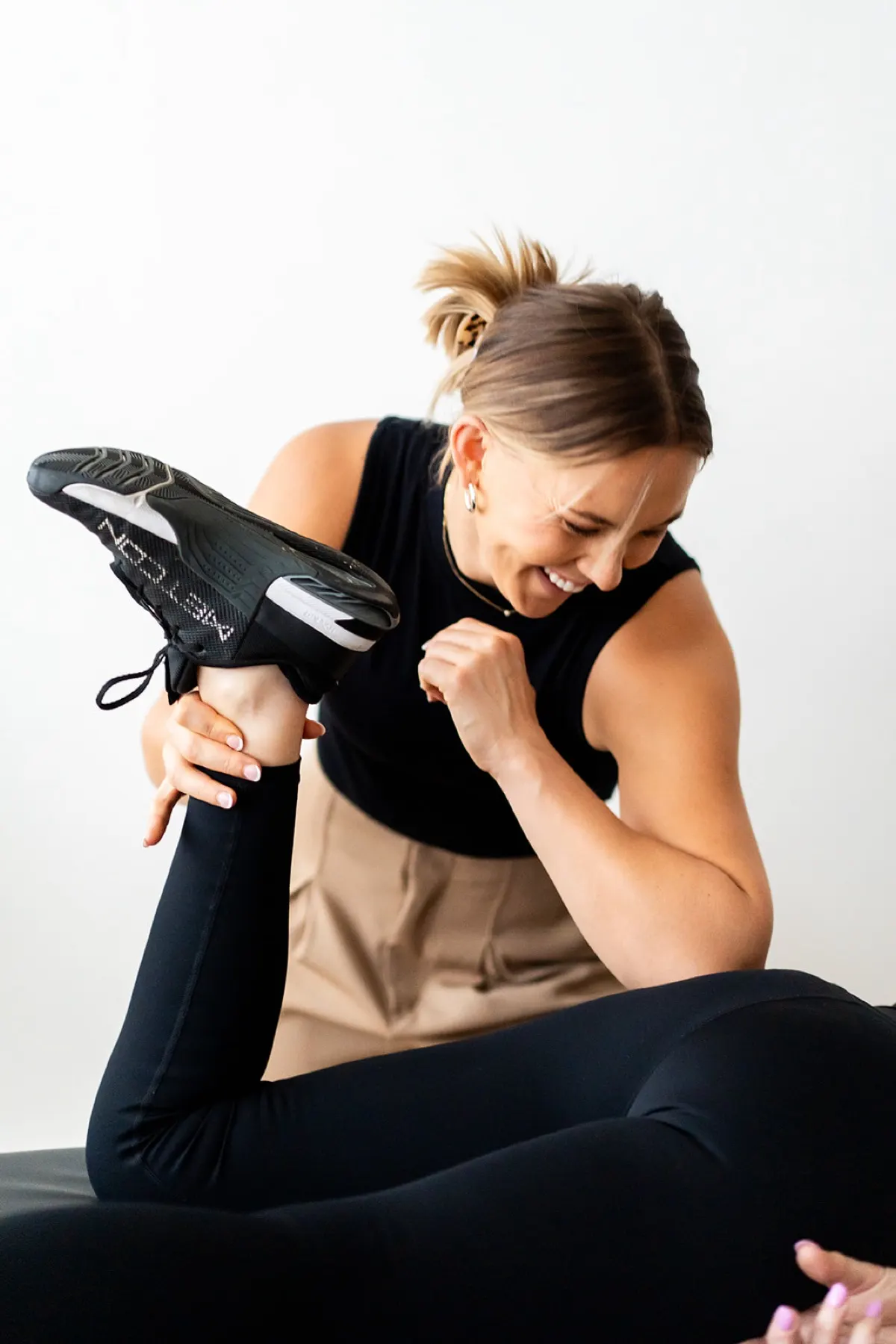
Joey takes a careful history, then tests the nerve itself: how far your leg can lift, the strength of your muscles, your reflexes and the feeling in your skin. She'll also check your lower back, hips and pelvis, because problems there often feed into leg pain. If imaging is clinically indicated, she'll refer you for a scan.
Treatment is personalised to what the assessment shows, and can include joint mobilisation or adjustments to your lower back and pelvis, soft tissue work and dry needling through the buttock, and nerve-glide exercises that help the nerve move more freely. We'll tell you what's happening as we go, and how your leg may feel over the next day or two.
Sciatica can take a few weeks to calm down, and progress isn't always a straight line. We'll explain what to expect, which signs mean things are improving, and when a change in your symptoms means we need to see you sooner. Many people notice the pain pulling back up the leg towards the buttock before it settles, which is usually a good sign.
Your personalised plan for sciatica
Once we know what's driving your leg pain, we'll explain it and recommend a plan for the first few weeks. How often you come in depends on what we find and how you respond, with a review along the way to check your progress.
The first phase is about settling the nerve so you can sleep, sit and walk more comfortably. After that, the focus moves to strength in your back, hips and legs, so the nerve has less to put up with. Your goals shape that second phase. For one person it's getting back to running along the Rockingham foreshore, and for another it's getting through a full shift without leg pain. If something isn't adding up, we'll refer you to your GP or a specialist.
If your sciatica keeps coming back, we'll look for the pattern behind it.
Book $130 new patient appointmentHelping sciatica settle at home
Nerves like gentle, regular movement. You'll leave with a couple of exercises and clear guidance on how often to do them. These usually help as well:
- Walk in short, regular bouts rather than one long one
- Avoid sitting for more than about half an hour at a time
- Try a pillow between your knees if lying on your side is more comfortable
- Stop any exercise that sends pain further down your leg, and let us know
Runners around Port Kennedy and Warnbro often notice sciatic pain when they ramp up their kilometres for a race. Because Joey is a strength and conditioning coach as well as a chiropractor, your training can be adjusted while the nerve settles, then built back up to race fitness.
Everyone is different, so results vary from person to person, and chiropractic care isn't right for everyone. If someone else would help you more, we'll tell you and help you find the right person.
Other conditions we see at Range

Move well, train smart, perform better
It's the approach Range is built on. Your care starts by getting you moving with confidence again, then builds the strength to keep you that way. Book online, or call or text 0403 623 490 if you'd like to talk it through first.