
Shoulder pain and injuries in Port Kennedy
Hands-on care and strength-based rehab for shoulder pain and shoulder injuries.
Are you experiencing any of these?
- Pain when you lift your arm overhead or reach behind your back
- A shoulder that feels loose, or like it might slip out
- Aching at night, especially when you lie on that side
- Losing strength when you press or pull
- Pain that creeps back each time you return to the gym
Shoulder pain is a regular reason people come to Range, and shoulders are one of Joey's favourite areas to work with. We see everything from a shoulder that's sore after a big week of training to instability that's held someone back for years.
The shoulder is the most mobile joint in your body, so it relies on strong, well-coordinated muscles to stay happy. That's good news, because strength is something you can build.
If your shoulder pain followed a fall or a heavy knock, if your arm looks out of place, or if you have chest pain or pain spreading into your jaw, please see your GP or go to hospital first.
What's often behind shoulder pain
Shoulder problems usually come from load building faster than the shoulder can cope with. Common causes we see include:
- Irritated rotator cuff tendons, often after a jump in training
- Instability, where the joint has slipped or dislocated before
- Stiffness through the upper back and neck that changes how the shoulder moves
- Repetitive overhead work in trades and labouring jobs
- Contact sport, including grappling and boxing
How chiropractic care may help with shoulder pain
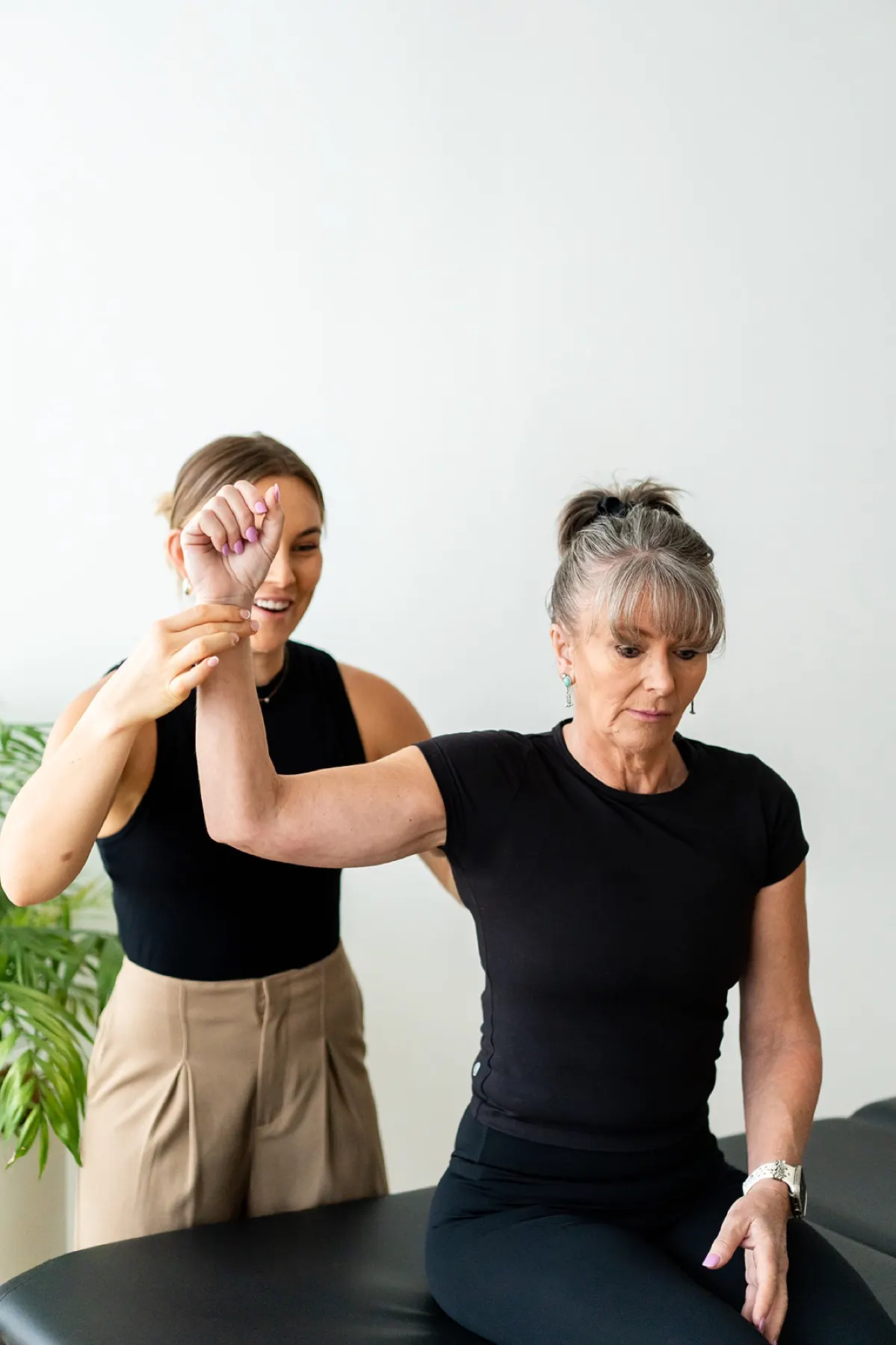
Your appointment starts with a full history, then an assessment of how your shoulder moves on its own and with assistance. Joey will test the strength of the muscles around it and run specific tests to narrow down what's sore. Because the neck and upper back often feed into shoulder pain, she'll check those too. If imaging is clinically indicated, she'll refer you for an X-ray or MRI.
Early treatment is personalised to what the assessment shows, and can include soft tissue work, dry needling, joint mobilisation and adjustments to your upper back or neck. Each step is explained, along with why it matters for your shoulder.
Shoulder pain can be frustrating, especially when it's stopped you lifting or training the way you used to. We'll be clear about what we think is going on and how long things are likely to take. It's usually better to keep training in a way your shoulder can handle than to stop everything, so we'll show you what to change in the gym while your rehab does its work.
Your personalised plan for shoulder pain
Shoulder rehab is where Joey's strength and conditioning background comes in. Once the first visits have settled your pain, you'll get a program that starts with simple, controlled exercises and progresses to the pressing and pulling your work or sport needs.
For unstable shoulders, the focus is on control and confidence in positions that used to feel risky. Visits spread out once you're working through your program on your own. If your shoulder isn't responding as expected, we'll refer you to a sports doctor or surgeon for a second look.
If you've had a dislocation before, we'll also help you rebuild trust in the shoulder, step by step.
Book $130 new patient appointmentLooking after your shoulder between visits
Your exercises do most of the heavy lifting with shoulder rehab. We'll check them each visit and add to them as you get stronger. In the meantime:
- Keep using your arm in the ranges that feel comfortable
- Change how you lift overhead rather than stopping all training
- Sleep with a pillow under your arm if lying on your side hurts
- Let us know straight away if your shoulder slips or feels unstable
We see shoulder injuries in combat athletes and gym-goers from Port Kennedy and Rockingham, and in FIFO and trade workers whose jobs keep their arms overhead for hours. Your rehab is built around the work your shoulder needs to do, whether that's a full roster on site or getting back in the ring.
Everyone is different, so results vary from person to person, and chiropractic care isn't right for everyone. If someone else would help you more, we'll tell you and help you find the right person.
Other conditions we see at Range

Move well, train smart, perform better
It's the approach Range is built on. Your care starts by getting you moving with confidence again, then builds the strength to keep you that way. Book online, or call or text 0403 623 490 if you'd like to talk it through first.